
Climate-Smart Farming to Boost Agri Financing
Why talk of climate smart farming in the context of business finance? Because they aid sustainable agricultural business and inclusive development.
The Farmer’s Adaptive Solution in the Countryside: At FRIENDS Consult, we believe technologies like solar irrigation, drought-resistant cropping and climate-smart digital records help with solutions that strengthen decision-making, resilience, and sustainable agriculture and related financing. The convergence of climate adaptation and green finance provides transformative frameworks that can help farmers, agribusinesses, and financial institutions to harness resilient agricultural practices and related financial aspects.
For centuries, agriculture was purely dependent on traditional weather. If rains failed unexpectedly, or prolonged droughts strained soil moisture, agribusiness owners and lenders suffered costly crop failures and loan defaults.
In today’s highly unpredictable climatic realities, unpreparedness is a liability. The combination of shifting rains, severe droughts, and intense flash floods fundamentally increases the need for climate risk management. By moving active, climate-adaptive solutions into the heart of farming communities, agribusinesses can transition from reactive crisis management to proactive balancing. For farmers, this means near enhanced food security, dramatically reduced operational risks, and the ability to mitigate weather shocks well in time. To financiers, it means lower credit risks in agricultural finance.
The Shift to Climate Adaptation: Modern African agribusinesses can be equipped with advanced, climate-resilient practices. This enables localized risk mitigation so that the agricultural systems themselves can withstand extreme dry spells, interpret seasonal soil requirements, and prioritize resources like water and moisture without requiring continuous trial-and-error.
From Risk to Resilience: The real breakthrough lies in upgrading farms from simple “passive endurance” (which only hopes for rain) to active Environmental, Social, and Governance (ESG) frameworks (which adapt and execute based on climate demands). Rather than farming blindly in a shifting season, a climate smart farming model can plan multi-step operations. If it can, for instance, detect early stages of a prolonged drought. The system can, among other solutions:
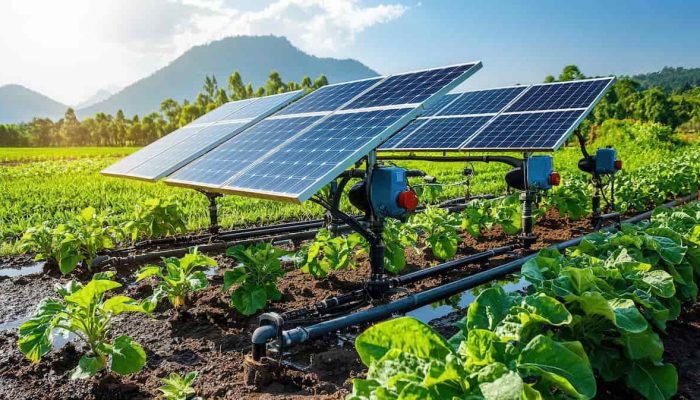
- Run off-grid solar pumps to provide the needed water supply
- Help deploy drought-resistant and early-maturing crop varieties to protect initial investments.
- Implement zero-tillage and cover cropping to retain vital moisture during dry spells.
Collaborative Financial Networks: In a collaborative network, green finance relies on institutions that partner across the country, sharing capital metrics with sustainable farms to optimize funding and risk reduction. Ultimately, this evolution reshapes agricultural financing from a system of static risk into a system of intelligent, proactive action.
Dr. Keren Obara.
Projects Officer, Marketing and Innovations, FCL