
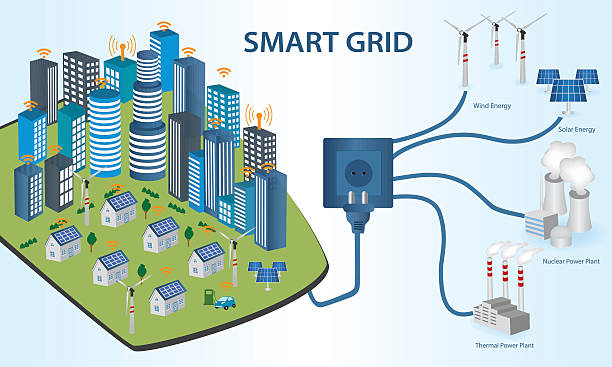
Everything-to-Grid Energy. Stored Power for a Greener Environment
Why talk of X2G and smart grids? Because they aid sustainable business and development.
The Executive’s New Reserve in the City: At FRIENDS Consult, we believe technologies like smart grid infrastructure, distributed energy resources, and other digital innovations help with solutions that strengthen decision-making, resilience, and sustainable development across multiple sectors. The convergence of Everything-to-Grid (X2G) energy storage and smart city ecosystems provide transformative technologies that can help governments, development partners, and businesses to harness decentralized renewable power for greater operational efficiency and impact.
For decades, electricity was purely from generation. If demand spiked unexpectedly, or grid infrastructure strained under peak loads, business leaders and utility providers found out through costly blackouts or sudden price surges.
In today’s hyper-accelerated markets, power instability is a financial liability. The convergence of electric vehicles (EVs), localized battery systems, and intelligent grid networks fundamentally increase the need for energy management. By moving active, distributed storage solutions into the heart of consuming cities and communities, users can transition from reactive consumption to proactive balancing. For executives, this means near-instantaneous energy security, dramatically reduced operational risks, and the ability to mitigate supply shocks well in time.
The Shift to Onboard Processing: Modern electric vehicles and commercial facilities can be equipped with advanced, grid-interactive software. This enables localized energy processing so that the systems themselves can detect grid anomalies, interpret load context and prioritize when to store or discharge electricity without requiring continuous centralized manual control.
From Automation to Autonomy
The real breakthrough lies in upgrading systems from simple “passive storage” (which only holds a charge) to autonomous Vehicle-to-Grid (V2G) and Everything-to-Grid frameworks (which reason and execute based on market demands). Rather than drawing power blindly from a strained network, an autonomous energy storage node can plan multi-step operations. If it detects the early stages of a grid peak or a renewable energy generation dip, the system can autonomously:
- Adjust its own power flow direction based on localized pricing signals.
- Discharge optimal kilowatts to support the immediate neighborhood or facility.
- Schedule automatic recharging windows precisely when demand falls and cleaner, cheaper power becomes available.
Collaborative Virtual Networks (CVN)
In a collaborative virtual network, intelligent orchestration relies on multi-node systems that collaborate across smarties or town, sharing capacity metrics with neighboring storage units to optimize load distribution and grid synchronization. Ultimately, this evolution reshapes municipal energy from a system of static distribution into a system of intelligent, proactive action. By moving autonomous resource management to the grid edge, organizations can respond to energy shortages, track supply fluctuations, and secure business continuity in near-real time. This is good for business, the economy, and larger society.
Dr. Keren Obara.
Projects Officer, Marketing and Innovations, FCL