
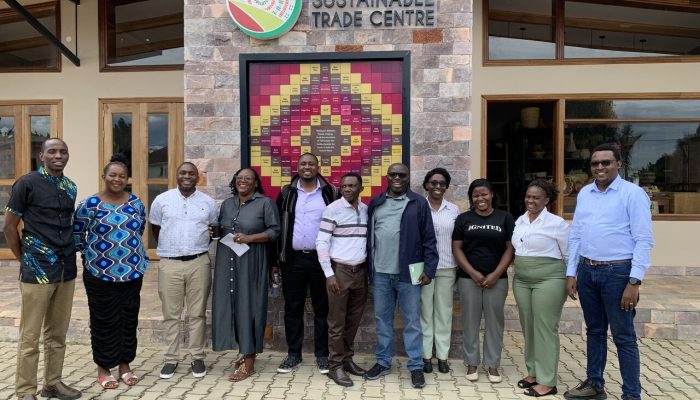
From Grant Dependence to Enterprise: Rwenzori Sustainable Trade Centre (RSTC) Comes of Age
Someone once said that it is impossible for a donor-dependent organization to become viably independent. We at FCL don’t fully agree. We have worked with several who broke the dependency frontiers. RSTC is an upcoming one.
Introduction
From April to November 2026, FRIENDS Consult Limited (FCL) advised and worked with the Rwenzori Sustainable Trade Centre (RSTC) in western Uganda to design a Transition and Commercial Strategy. Serving local artisans, farmers, and producer groups, RSTC has long faced the risk of relying heavily on grants and a small buyer base. In preparation to break free of dependency, the organization decided to start the journey.
Development and business case
To help RSTC move toward commercial sustainability without losing its social mission, FCL worked with RSTC to conduct a thorough organizational diagnostic, develop a clear options paper, assess global & local market viability, establish alignment note with Uganda’s Fourth National Development Plan (NDP IV) and 10X Growth Strategy, and construct well-informed financial models for three business lines: a) café/restaurant, b) crafts market and c) farmers’ market. Recommendations for actions were benchmarked against established enterprises like Uganda Crafts 2000 Ltd and Gahaya Links.
The reason it matters.
Why does this matter? Many Ugandan social enterprises struggle when grants end. Moreover, with Uganda’s AGOA access suspended, exporters of community-produced goods must pivot toward markets where Uganda retains preferential access, notably the European Union and United Kingdom. Rather than relying on optimism, the strategy tests diversified income streams, across crafts, coffee, cocoa, consultancy, retail, and markets, before capital is committed.
At the community level, this initiative aligns with Uganda’s national priorities, private sector-led growth, value addition, export competitiveness, and job creation, as well as UN Sustainable Development Goals 1, 8, 12, and 17, reflecting a broader shift toward blended, self-sustaining development models.
Conclusion
For beneficiaries, commercializing RSTC means more reliable buyers, fairer prices for quality goods, local jobs, and a resilient institution capable of delivering training and market linkages long after grants expire. Ultimately, RSTC shows that social purpose and commercial discipline reinforce one another—offering a practical blueprint for Ugandan social enterprises at a crossroads. This model is worth replicating.
Amman Nyende
Project Officer, FRIENDS Consult Limited