
The Dawn of Physical AI
From Digital to Physical
For decades, artificial intelligence existed primarily behind screens, processing text, pixels, and code. Today, we are witnessing a profound extension from digital AI to Physical AI systems. These have physical forms that perceive the material world in real time and physically navigate or explore and learn from their environment. This evolution successfully bridges abstract computation with tangible reality.
What Does Physical AI Represent?
Physical AI represents the convergence of advanced foundational models with robotics, edge computing, and mechanical engineering. Unlike traditional automation which relies on rigid, pre-programmed instructions, Physical AI uses generalized intelligence to adapt to unpredictable variables. This allows it to intake data, process it via embodied intelligence, and directly command hardware actuators.
What Drives Physical AI?
Three technological breakthroughs drive this revolution.
- Multimodal embodiment: AI models process sight, sound, touch, and spatial data simultaneously to understand context.
- Simulation to reality (Sim2Real): Systems practice physical tasks millions of times in virtual simulations before hardware deployment.
- End to end learning: Neural networks map raw sensor inputs directly to motor outputs.
Effect on the Future of Work.
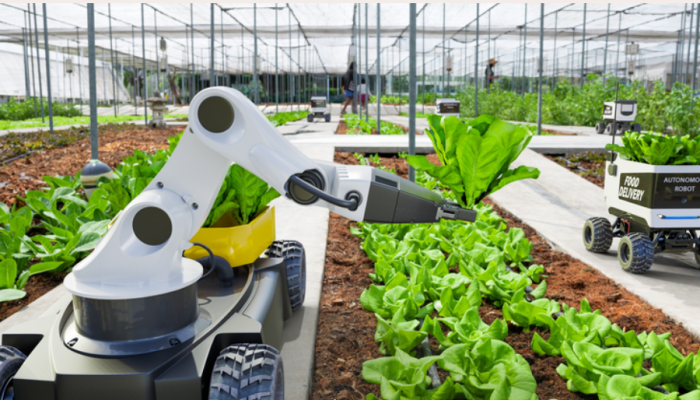
Physical AI is transitioning from laboratory research to active deployment across critical industries. Next generation humanoid robots learn manual skill from human demonstrations. Autonomous vehicles navigate unstructured human environments safely. In precision agriculture, for instance, physical AI harvests crops autonomously, while in smart infrastructure, it optimizes physical logistics based on live data.
Challenges
Despite great potential of physical AI, however, significant roadblocks remain. The hardware gap persists because building durable actuators and tactile sensors is slow and expensive. Edge computing constraints require balancing massive computational power with thermal and battery limits. Crucially, while digital AI errors cause flawed text, physical AI errors can cause real world property damage or personal injury.
Conclusion
Ultimately, the dawn of Physical AI will fundamentally reshape the global labor economy. By entering homes, hospitals, and construction sites, these systems will alleviate workforce shortages and extend human capability into uncharted physical territories. But a few challenges must be fully addressed first.
Dr. Keren Obara.
Projects Officer, Marketing and Innovations, FCL